
[BLOG] Why Global Investors are Turning Their Eyes to South Korea’s Carbon Market
2026-06-24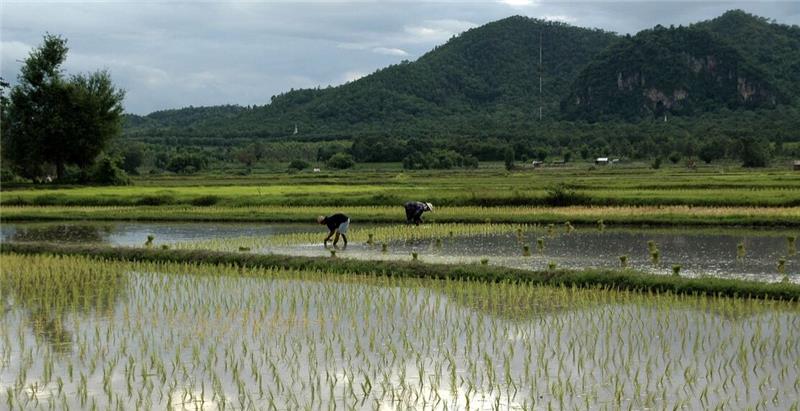
The Dawn of a New Era in Asia’s Carbon Pricing
In the first half of 2026, the South Korean carbon market sent a significant signal across green finance markets. The price of Korean Allowance Units (specifically KAU25) rose by approximately 2.5 times within just six months, breaking past the 20,650 KRW(13.34 $) mark in June. Earlier in January, the market recorded a notable single-day gain of over 8%.
Institutional investors and global enterprises looking beyond short-term price movement will find something more substantive here: a healthy, maturing market signal. The K-ETS (Korea Emissions Trading Scheme) is undergoing a profound structural transition where regulatory design, pricing mechanisms, and supply-demand dynamics are converging. For international players, this price rally represents a window of opportunity that is opening, not closing. As carbon pricing becomes standard industrial policy across major economies, Korea’s market is increasingly attracting attention as Asia’s most mature compliance platform.

Inside K-ETS Phase 4: Structural Scarcity Drives Long-Term Value
The dramatic price movement in Korea is the direct result of deliberate policy design. The K-ETS has officially entered its Phase 4 (2026–2030), characterized by three structural pillars:
Aggressive Cap Reduction: To meet its ambitious 2030 Nationally Determined Contributions (NDC), the South Korean government has significantly reduced the total volume of allowable emissions compared to Phase 3.
Expansion of Paid Allocations: The proportion of carbon allowances that corporations must purchase through auctions has expanded considerably. Free allocations are rapidly diminishing.
Institutionalized Market Stability: The government has formalized a Market Stability Reserve (MSR) mechanism. When prices spike, reserve volumes are released; when the market softens, auction volumes are reduced. The result is a managed, predictable compliance ecosystem built for the long term.
Korea is no longer a low-cost carbon market. The Korean allowance market has become one of the most closely watched compliance markets in Asia, and this structural shift is not going to reverse.
The Strategic Angle for International Investors and Partners
For a global enterprise or an institutional ESG fund, a rising compliance market opens distinct strategic advantages.
1. A Mature, Credible Market
Launched in 2015 as the first nationwide cap-and-trade system in Asia, the K-ETS has over a decade of operational history. By aligning with EU-level stringency in Phase 4, Korea offers international investors a highly regulated, transparent, and legally secure environment. This is a meaningful point of distinction from the fragmented or unpredictable character of many emerging voluntary markets.
2. The Incentive to Invest in High-Value Offsets
As local compliance prices stay elevated, the economic viability of high-quality carbon offset projects rises with them. South Korean compliance entities are actively seeking high-integrity credits to manage their rising local costs. International investors who can supply premium, verifiable credits are well-positioned to capture significant premiums in this environment.
3. The Article 6.2 Gateway
South Korea has established itself as a hub for Article 6.2 (internationally transferred mitigation outcomes) under the Paris Agreement. The Korean government has actively signed bilateral frameworks with countries across Southeast Asia and beyond to secure cross-border carbon credits. Carbon reduction projects developed internationally can be channeled into Korea’s high-value compliance demand, creating a concrete pathway for international capital to enter a structured, high-price market.

ThanksCarbon: Your Trusted Local Partner in Korea’s Carbon Market
Navigating this landscape effectively requires deep technical expertise and on-the-ground execution capability. ThanksCarbon partners with companies to design carbon risk strategies and build actionable decarbonization pathways.
ThanksCarbon bridges the gap between complex Asian field realities and stringent global corporate standards through a proprietary, tech-driven approach:
Next-Gen dMRV via Haimdall: Our satellite and AI-powered Monitoring, Reporting, and Verification (dMRV) platform, Haimdall, delivers precision measurement for nature-based solutions (NbS). Currently deployed in large-scale Alternate Wetting and Drying (AWD) methane-reduction rice projects across Cambodia, Bangladesh, and Vietnam, Haimdall ensures every credit generated meets the rigorous criteria of Gold Standard, Verra, and Article 6.2 frameworks.
Biodiversity Alignment with Terre: Through Terre, our natural capital monitoring and biodiversity impact assessment service, ThanksCarbon enables companies to track ecosystem conditions and meet the growing disclosure requirements of TNFD, GRI 101, and EU CSDDD/EUDR frameworks.
For global institutional investors and multinational corporations looking to deploy capital into Asian decarbonization, ThanksCarbon serves as a trusted local execution partner, translating complex local regulations into institutional-grade carbon assets.

The Time to Position is Now
The transformation of the South Korean carbon market is an established reality. The tightening of the cap, the scaling of paid auctions, and the rise of global border adjustments are macro-trends that shape the terrain ahead. Prices will fluctuate, but the structural direction is clear.
For international stakeholders looking to optimize their climate portfolios, establish a position in Asia’s most robust compliance market, or source high-integrity Article 6.2 credits, early action remains the most effective strategy. The market belongs to those who position early.
We welcome conversations with institutional investors, corporations, and government bodies exploring Asia’s carbon transition. Reach out to ThanksCarbon.
📌 Related articles
- Korean Government Intervenes as ETS Allowance Prices Surge
배출권 가격 급등하자…정부, 시장 개입 공식화 - Korea’s Carbon Allowance Price Jumps 2.5x in Six Months, Pressuring Power Tariffs
반년 새 2.5배 폭등한 탄소배출권…전기요금 압박 커진다 - “Nothing Stays Cheap”: Korea’s Carbon Allowances Up 59%, Power Bills Under Strain
“안오르는게 없다” 탄소배출권마저 59% 급등…울고싶은 전기요금
 Newsletter Subscribe


